
Papyrus and Poultice: Medicine in Egypt and Mesopotamia
Four thousand years ago, in Egypt and in Mesopotamia, people who treated the sick began writing down what they did. Not only spells, but cases: an examination, a diagnosis, a verdict on whether the injury could be treated at all, and then a treatment. Those documents survive. They show real empirical medicine, systematic and sometimes genuinely effective, sitting in the same texts as incantation and ritual for thousands of years, with no sign that anyone involved felt obliged to choose between them. This is what the papyri and the tablets actually support, tier by tier, including the two opposite overclaims the evidence refuses.
There is a moment in the history of medicine that is easy to walk past, because nothing dramatic happens in it. Someone writes down a case. Not a charm and not a story about a god, but a patient: this is the injury, this is what I found when I examined it, this is what I judge it to be, this is whether I can do anything about it, and this is what I did. In Egypt those records were written on papyrus. In Mesopotamia they were pressed into clay. Enough of both survive that we can read, four thousand years later, what an ancient healer thought he was doing.
What follows is that record, claim by claim, each one carrying the evidence it actually has. The honest shape of it is stranger than either of the two stories usually told about it. This is not a case of ancient people quietly possessing modern medicine, and this article refuses that reading outright at the end. It is also not a case of superstition with a few lucky accidents in it, and it refuses that too. What the papyri and the tablets show is careful observation and genuinely active drugs standing beside incantation, amulet and prayer, in the same documents and the same professions, for millennia. Nobody in them appears to have experienced that as a contradiction.
01The Oldest Surgical Text
Begin with the single most surprising document either civilization left behind, because it sets the terms for everything after it.
The Edwin Smith Papyrus, dated to about 1600 BCE, contains 48 surgical cases organized from the head downward. Every case follows the same fixed format: a title, an examination, a diagnosis, a verdict, and a treatment. The verdict is the part that makes it extraordinary, because it is a standing three-way judgment about the limits of the practitioner's own power: an ailment I will treat, an ailment I will contend with, an ailment I will not treat. A physician working from this text was expected to decide, case by case, whether the injury in front of him was treatable, arguable, or beyond him, and to write down which. That rational and empirical approach, and the systematic organization of the cases, has no known parallel of comparable antiquity.
The document we have is not the original. It is a copy, made by a scribe in the seventeenth century BCE from an older medical treatise, and the scribe made copying errors, some of which he corrected in the margins. Linguistic analysis of the underlying text places its original composition in the Old Kingdom, roughly 2700 to 2200 BCE. That is the range many scholars connect to the circle of Imhotep, architect and physician to Pharaoh Djoser around 2650 BCE.
The papyrus may therefore trace back to Imhotep's own era, and the sophistication of its surgical cases carries an implication worth stating plainly: an established medical tradition already existed by the third millennium BCE. Whatever else this text is, it is not a beginning. It is the summary of something that had already been practiced long enough to be systematized.
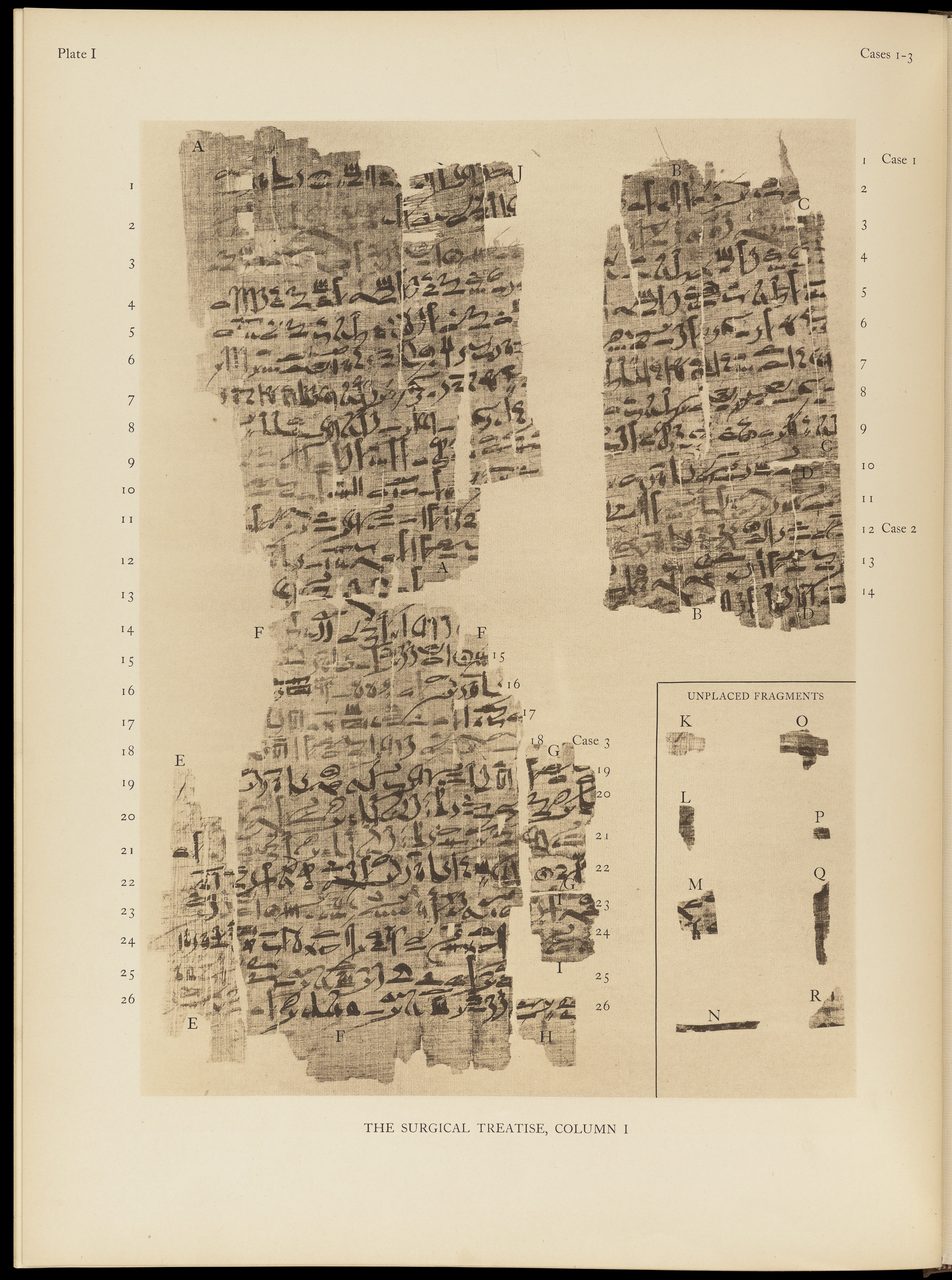
The papyrus survives as a copy, made by a scribe around the seventeenth century BCE, of an older treatise; the scribe made his own copying errors and corrected some of them in the margin, which is itself a small window into how these documents were transmitted.
02Seven Hundred Remedies
The surgical papyrus is an exception in one respect. Most surviving Egyptian medical writing is not about trauma at all. It is pharmacy, and a great deal of it. These documents are read here strictly as medicine: what they say, how they are structured, and what they prescribe. What the scripts themselves are and how they work is a separate subject, and it is not this one.
The Ebers Papyrus, dated to about 1550 BCE, is the longest surviving Egyptian medical text: 110 pages holding roughly 700 remedies for ailments including eye diseases, skin disorders, digestive complaints, gynecological conditions and parasitic infections. Its ingredients include honey, frankincense, opium, castor oil and mineralized antimony. More precisely, it belongs to the late Second Intermediate Period or the early New Kingdom; it runs roughly 20 meters unrolled; it is held today at Leipzig University Library in Germany; and it too is believed to have been copied from earlier Egyptian source texts.
The Kahun Papyrus, dated to about 1825 BCE and the Twelfth Dynasty, is the oldest known Egyptian gynecological text. It describes conditions of the uterus, fertility treatments, contraceptive methods including topical preparations, and pregnancy tests, one of which may have detected hormonal changes through the germination of grain. It was found at El-Lahun in the Faiyum by Flinders Petrie in 1889 and first translated by F. Ll. Griffith in 1893. One boundary is worth marking precisely, because it is the kind of detail that gets rounded off: as a surviving physical manuscript, this is the oldest known Egyptian medical papyrus, not the oldest medical text overall. The Edwin Smith Papyrus's own underlying composition is inferred to be older still, by linguistic analysis rather than by the age of the surviving copy, and a pair of Sumerian clay tablets, dated to the last quarter of the third millennium BCE, roughly 2250 to 2001 BCE, is older as physical objects than any surviving Egyptian medical document.
| Papyrus | Date | What It Contains | What Else Is Known |
|---|---|---|---|
| Edwin Smith | About 1600 BCE as the surviving copy; the underlying treatise composed in the Old Kingdom, roughly 2700 to 2200 BCE | 48 surgical cases organized head to toe, each with a title, examination, diagnosis, verdict and treatment | A scribal copy carrying copying errors, some of them corrected in the margins |
| Ebers | About 1550 BCE, late Second Intermediate Period or early New Kingdom | 110 pages, roughly 700 remedies for eye, skin, digestive, gynecological and parasitic conditions | Roughly 20 meters unrolled; held at Leipzig University Library; itself believed copied from earlier Egyptian texts |
| Kahun | About 1825 BCE, Twelfth Dynasty | The oldest known Egyptian gynecological text: conditions of the uterus, fertility treatments, contraceptive methods, pregnancy tests | Found at El-Lahun in the Faiyum by Flinders Petrie in 1889; first translated by F. Ll. Griffith in 1893 |
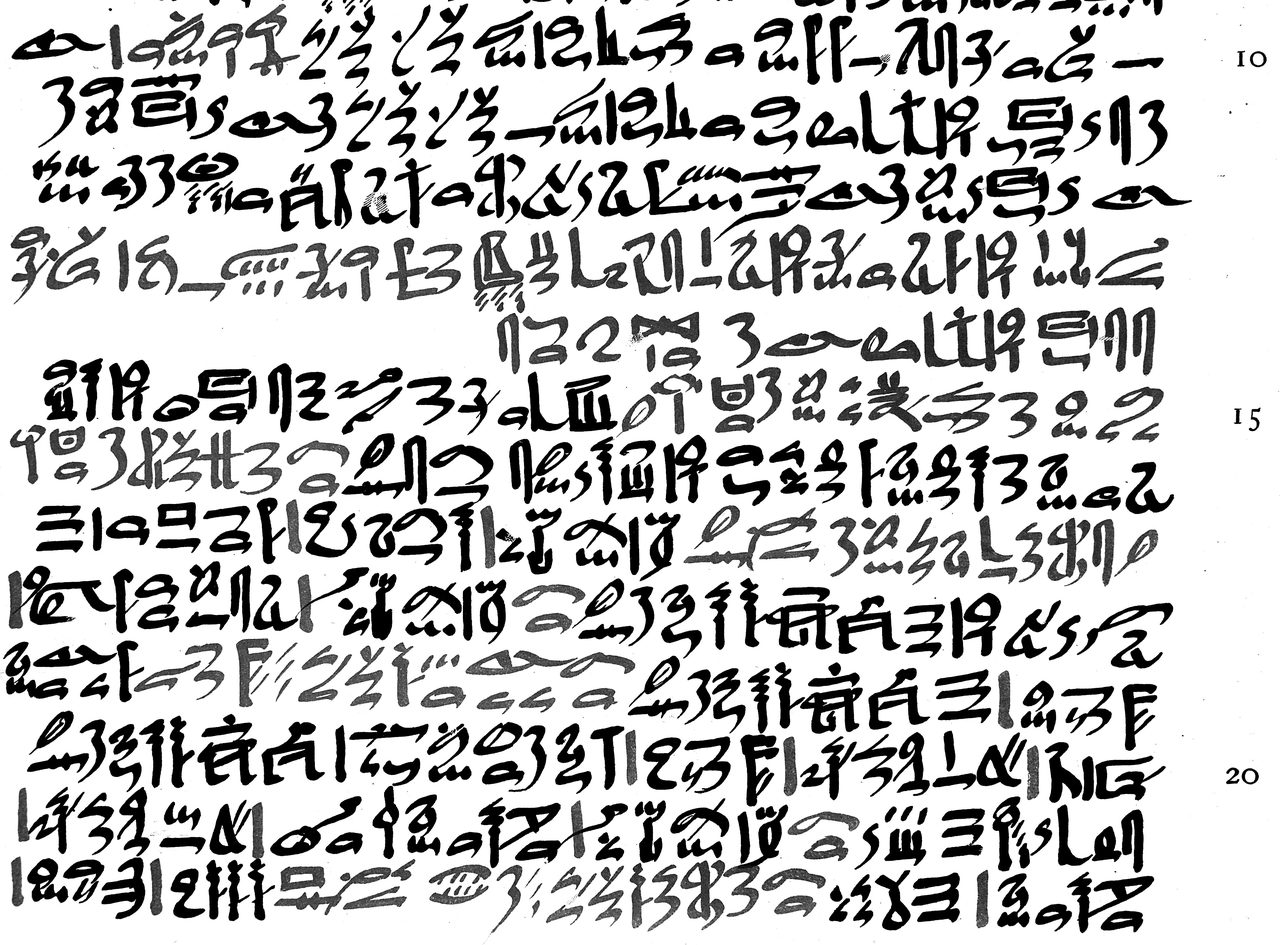
03What Was Actually In The Jars
A pharmacopoeia is only as interesting as its chemistry, which makes the obvious question the right one. Did any of it do anything?
Many Egyptian pharmaceutical preparations contain compounds whose pharmacological activity modern science confirms. Honey is antibacterial, through hydrogen peroxide production, low water activity and low pH. Willow bark belongs to the salicylic acid family. Opium contains morphine. Aloe is anti-inflammatory. Copper salts are antiseptic. The significance is not that any one of these works. It is that they were selected at all: picking active substances out of the enormous field of things a person could put on a wound requires systematic observation of therapeutic outcomes. The selection itself is the evidence of method, and it is why this material cannot be filed under guesswork.
| Substance | Confirmed Pharmacological Activity |
|---|---|
| Honey | Antibacterial, through hydrogen peroxide production, low water activity and low pH |
| Willow bark | Of the salicylic acid family |
| Opium | Contains morphine |
| Aloe | Anti-inflammatory |
| Copper salts | Antiseptic |
This short list is not the pharmacopoeia. It is a sample drawn from a much larger body of Egyptian preparations, and its value lies in what its existence implies rather than in its length: somebody was watching what happened to patients, and keeping what appeared to help.
Nothing in this section is a recommendation. This is pharmacological history, a question about what ancient preparations contained and what those contents do, never a claim about what anyone should use.
Modern laboratory analysis confirms pharmacological activity in many Egyptian remedies. One specific case is worth naming: a remedy for eye infections combining copper salts and honey, where modern evidence supports the antibacterial efficacy of both components. Note where the tier sits, and why it sits there. What a laboratory can confirm is the activity of the ingredients, not the outcome for the patient who actually received them.
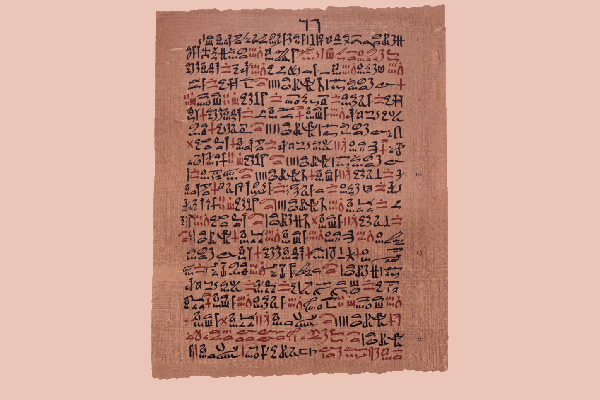
Not every remedy in the papyri names its target this clearly. This one does, which is part of why it is worth showing directly rather than only summarizing.
Kohl, the antimony sulfide and galena preparation used in Egypt both cosmetically and medicinally, is confirmed by modern analysis to have antimicrobial properties and a UV-filtering effect. It also carries the clearest example in this file of why a working remedy is never simply good news: lead-based kohl formulations involved chronic low-level lead exposure. The benefit and the harm are both real, they arrived in the same jar, and nobody using it could have separated them.
And not everything worked. Some ingredients in the very same texts, dung and urine and various animal parts, appear to have operated through ritual or psychological mechanisms rather than through direct pharmacological action. This is the point at which blanket verdicts fail in both directions at once. Distinguishing the empirically effective components from the ritually motivating ones requires case-by-case analysis of specific preparations, not a single grade awarded to the whole tradition, and any summary that grades it all at once, in either direction, is doing something other than reading it.
04The First Named Physician
Imhotep, whose dates are usually given as about 2667 to 2600 BCE, was chief architect to Pharaoh Djoser and is credited as the first named physician in history. He is credited as the architect of the Step Pyramid at Saqqara, the oldest extant monument of hewn stone known in the world. What happened to his reputation afterward is a different kind of fact: he was later deified as a god of medicine and healing, formally elevated to full-god status at a date usually placed after the Persian conquest of Egypt in 525 BCE, one of only two Egyptian mortals ever raised that far, alongside Amenhotep, son of Hapu. His cult reached its zenith in Greco-Roman times, and the Greeks identified him with their own healing god, Asclepius.
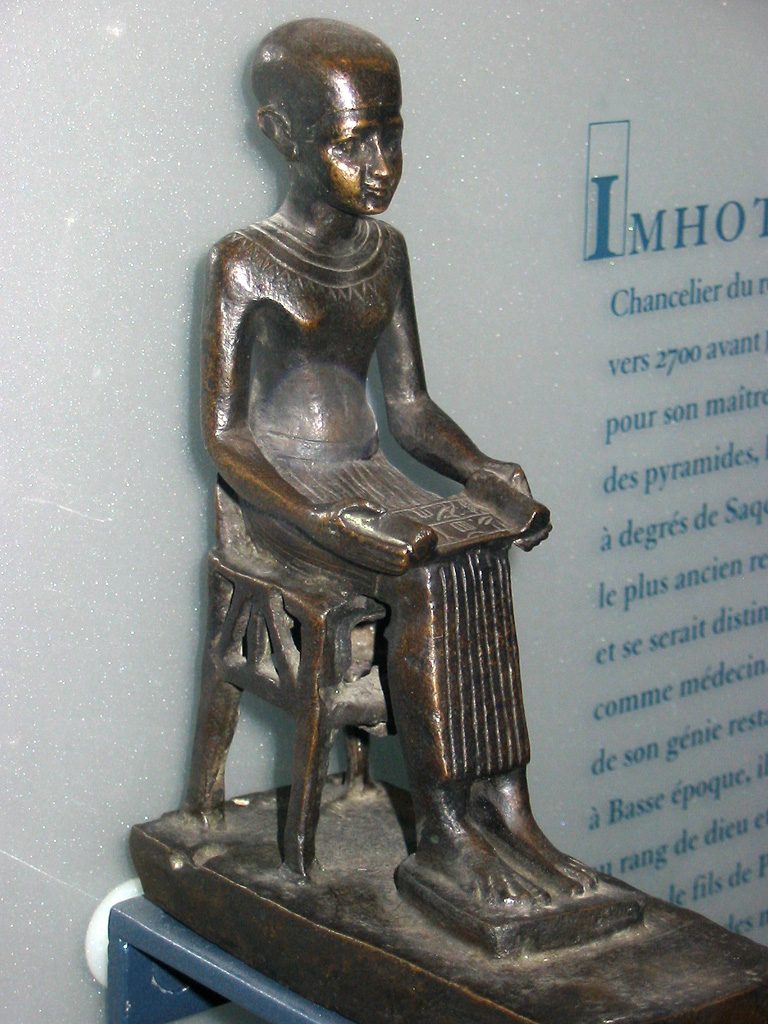
A physician becoming a god is evidence about religion and reputation, not evidence of hidden or superior technique. The corpus this article draws on treats his deification as a case of the same broader pattern, a human knowledge-holder mythologized, not as proof of anything extra he knew.
His temple at Saqqara became a healing center, functioning much as the later Greek Asclepieia would: petitioners came seeking divine healing through incubation, the practice of temple sleep, and through ritual. The treatment on offer at Saqqara, in other words, was a night spent inside a god's house.
Our own research file draws a wider connection out of this, and it belongs here as the file's own interpretation rather than as a finding: the deification of Imhotep, a historical physician who ends up a god of healing, matches a pattern this project traces across cultures, in which human holders of knowledge are remembered as supernatural beings. Read carefully, that is a claim about how societies remember, not about what Imhotep knew. A physician becoming a god is evidence about religion. It is not evidence of hidden or superior technique, and nothing in the record of his era needs one.
05Instruments, Teeth, And A Wooden Toe
Texts can flatter their authors. Objects are harder to argue with, and the objects are where the Egyptian record stops being a literature and becomes a practice.
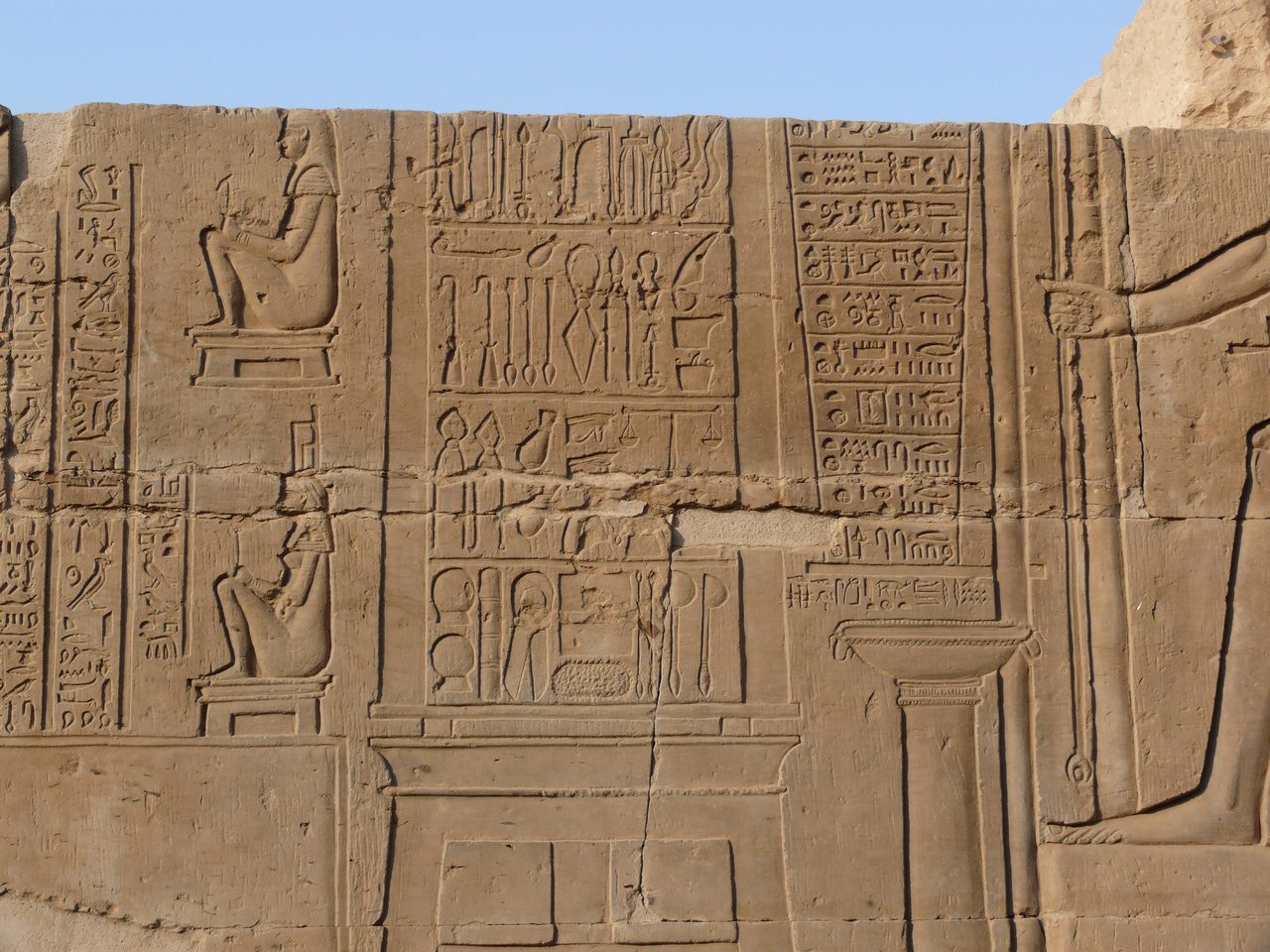
Sets of Egyptian metal surgical instruments have been recovered from tombs and temple sites: scalpels, forceps, hooks, saws, probes and cautery instruments. The bronze instruments from the Temple of Kom Ombo, of the Ptolemaic period, include forms recognizable as modern surgical tool types. The temple also carries a carved relief of surgical instruments, and the relief is later than the instruments themselves: it dates to the Roman period of the temple's construction, 138 to 218 CE. It is traditionally understood to show the instruments being presented to Imhotep, worshipped at Kom Ombo as a god of medicine, in a building Egyptologists understand to have functioned in part as a sanatorium. Tools, god and sanatorium, in the same place.
Trepanation, the cutting of an opening in the living skull, is attested in Egypt by skull evidence spanning the predynastic through the Ptolemaic periods, with survival rates of roughly 70 percent, consistent with survival rates documented in other ancient trepanning cultures.
Egyptian remains also show dental bridges, tooth extraction and the drainage of jaw abscesses. Dental conditions were being treated surgically as early as the Old Kingdom, roughly 2600 BCE.
And two prosthetics survive. The Cairo Toe, made of wood and leather and dated to roughly 950 to 710 BCE, and the Greville Chester Toe, made of cartonnage and wood, are both artificial big toes, and both show wear patterns indicating actual use for walking rather than manufacture as burial accessories. The Cairo Toe belonged to the mummy of Tabaket-en-Mut, likely a priest's daughter. It is jointed in three places, with leather lacing threaded through drilled holes to secure it to the foot while still allowing the joints to articulate. The wear is the strongest part of the evidence, because a purely funerary object does not get worn down by walking. Together the two toes predate the Roman-era Capua Leg of about 300 BCE, previously thought to be the earliest known prosthetic.
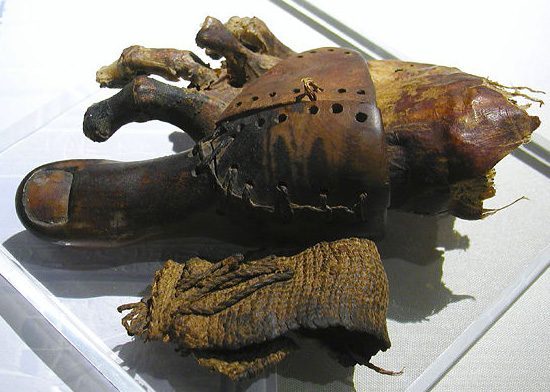
It is one of the clearest, most concrete facts in this entire record: not a claim about belief or method, but an object built to bear weight, and worn down doing it.
06Two Healers, One Patient
Now cross to Mesopotamia, where the mixture this article keeps insisting on is not an interpretation at all. It is the professional structure, written into who was allowed to practice.
Mesopotamian medicine operated through a dual practitioner system. The asu, the physician, worked with empirical treatments: bandaging, pharmacological preparations, dietary prescriptions. The ashipu, the exorcist, worked with incantations, ritual actions and amulets. Neither was a fringe figure, and neither was the other's replacement. Both were legitimate, state-sanctioned practitioners, and patients frequently consulted both.
The pharmacological half of that system is documented at scale. Thousands of cuneiform tablets describe medicinal preparations, drawing on roughly 250 plant substances, 120 mineral substances and various animal products, with dosages, preparation methods and routes of administration specified.
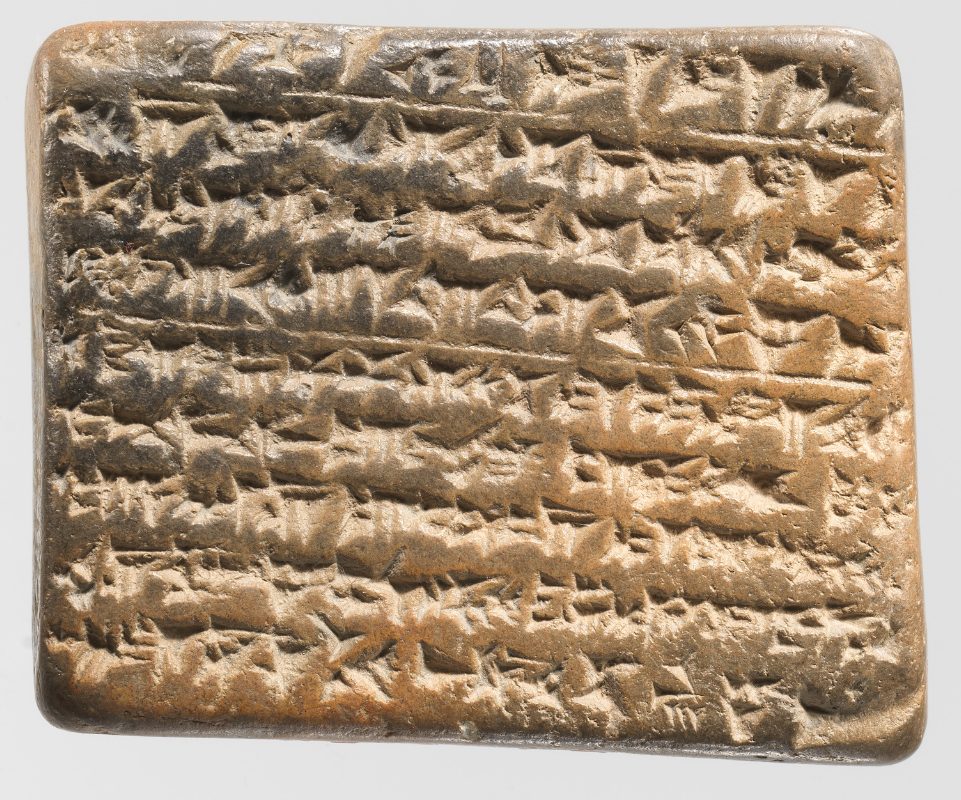
Hold those two facts together, because the second is what makes the first worth pausing on. The same society that gave the exorcist official standing also kept a materia medica of several hundred substances, with instructions precise enough to follow. The ritual did not crowd out the pharmacy, and the pharmacy did not embarrass the ritual. They were two doors into the same practice, and patients used both.
07Forty Tablets, Head To Toe
The Sakikkû, the Diagnostic Handbook, compiled about 1000 BCE from earlier sources and attributed to the scholar Esagil-kin-apli, comprises 40 tablets. It catalogues symptoms from the head downward and pairs them with prognosis, systematically correlating what a practitioner could actually observe (skin color, pulse, fever, behavior) with predicted outcomes. A handbook built around prognosis is answering a particular question, and it is not only what is wrong. It is what is going to happen.
Esagil-kin-apli himself is not a shadow. He was the ummânū, the chief scholar, to the Babylonian king Adad-apla-iddina, who reigned about 1067 to 1046 BCE, and a prominent citizen of Borsippa from a learned scribal family. His editorial work adapted roughly half of the handbook's entries from older forerunner texts of the second millennium BCE, and introduced a structural innovation of his own: organizing the symptoms systematically by body region.
Notice what has now happened twice. The Edwin Smith Papyrus arranges its 48 cases from the head down. The Sakikkû arranges its symptoms the same way, and there the arrangement is credited to a named editor as a deliberate improvement on what he inherited. We are proposing no connection between them; what can and cannot be said about transmission is the subject of this article's open questions, further down. It is simply worth noticing that when two literate medical traditions set out to make a human body searchable, both of them started at the top.
08A Law For Surgeons
The Code of Hammurabi, compiled about 1754 BCE toward the end of a reign dated about 1792 to 1750 BCE, contains medical malpractice law: prescribed punishments for surgical failure. In the wording carried by our own research file, Section 218 reads, 'If a physician made a deep incision with a lancet and the patient died, his hands shall be cut off.' That sentence should be read as one translation rather than as the law's fixed text. Published translations differ on the penalty itself, giving 'his hands shall be cut off,' 'his hand will be cut off,' and 'they shall cut off his fingers.' The variance is a problem of translation, not a dispute about whether the law existed or how severe it was. What the law establishes either way is the part that matters here: by the eighteenth century BCE, surgery was a recognized profession with legal accountability attached to its outcomes.
The stele carrying the code is itself a survivor with a route: black basalt, 2.25 meters tall, rediscovered in 1901 at Susa, in present-day Iran, and now in the Louvre.
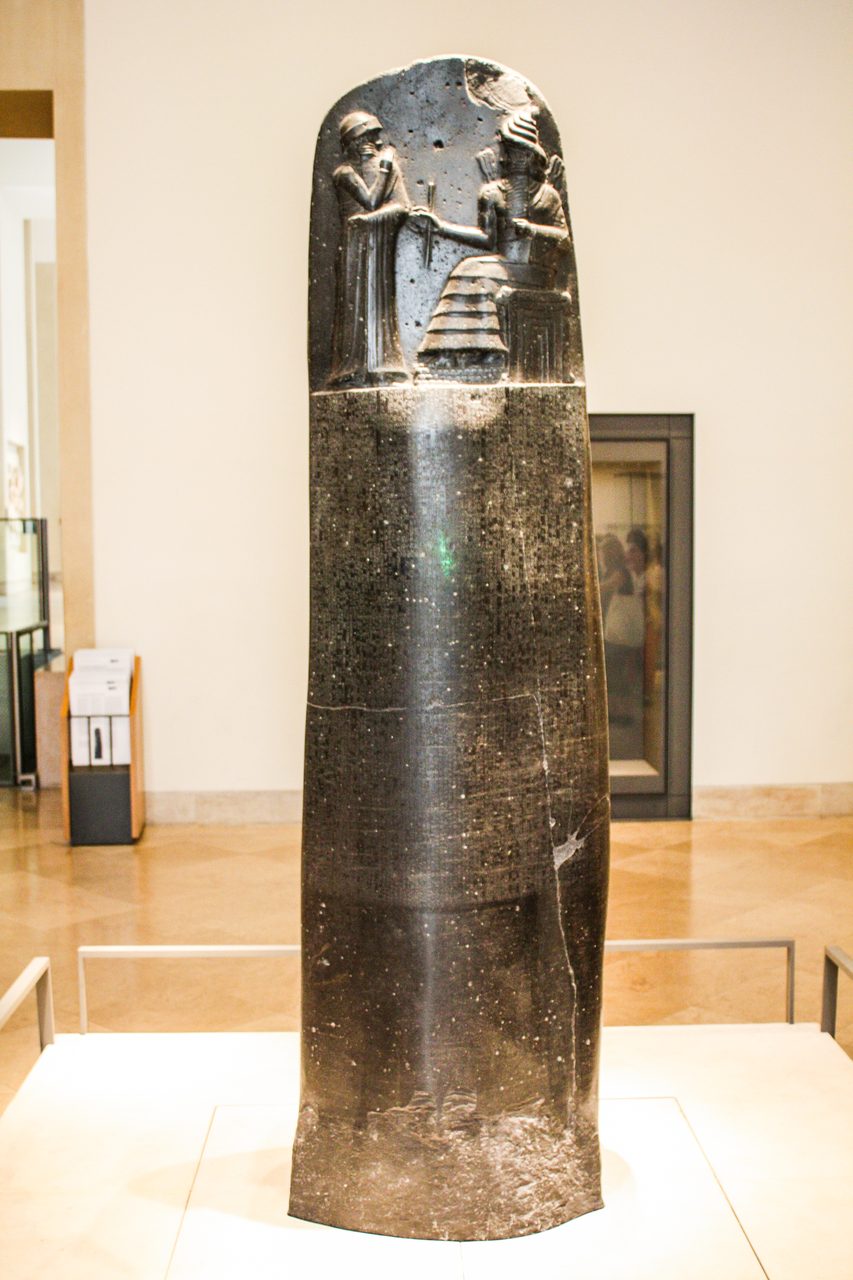
The medical clause is a small part of a much longer legal code, but it is the part that puts a number on what happened when Mesopotamian surgery went wrong, in the surgeon's own era rather than in retrospect.
09What They Knew About The Body
Mummification put Egyptian embalmers in direct and repeated contact with human internal anatomy. The brain, heart, lungs, liver, stomach and intestines were identified, handled and preserved. The medical texts, however, do not read like the work of people with that access. Egyptian medical writing shows limited anatomical detail compared with later Greek texts, and it describes the functions of organs in humoralist or vitalist terms: the heart as the center of intelligence, and the metu, a system of vessels believed to carry all of the body's fluids.
Why that gap exists is genuinely debated among scholars, and this article carries the debate rather than resolving it. Mummification was a distinct priestly profession, not a medical one, and the extent to which the embalmers' anatomical knowledge was actually shared with practicing physicians is disputed. Shared subject matter does not guarantee shared knowledge: two professions can handle the same organs for centuries and never pool what they learn. Whether these two streams of knowledge ran together or ran apart is unsettled, and nothing here settles it.
That gap matters for one of the two claims this article refuses outright, so it is worth flagging early. Knowing what a heart looks like is not the same as being able to operate on one.
10The Womb, The Barley, And The Acacia
Egyptian papyri describe multiple contraceptive preparations, and their chemistry is uneven in precisely the way the rest of the pharmacopoeia is. Pessaries of acacia tips ferment to produce lactic acid, which is a real spermicide. Other preparations combine crocodile dung with fermented dough, or are built on honey. Mesopotamian texts separately describe their own contraceptive preparations and fertility treatments, distinct from the Egyptian record, using plant-based preparations and ritual components. As everywhere else in this file, that is a statement about what the texts prescribe and what the chemistry does. It is not a recommendation.
The Kahun and Ebers papyri together indicate sophisticated gynecological knowledge, and one item of it has actually been put to a modern test. The ancient pregnancy test had a woman moisten grain with her urine, and watched to see whether it germinated. In 1963 Ghalioungui, Khalil and Ammar tried the method and found it roughly 70 percent accurate. Their sample was 48 urine specimens (40 from pregnant women, 6 from non-pregnant women and 2 from men) collected from the Department of Gynecology and Obstetrics at Ain Shams University Hospital and tested against wheat and barley seeds by the ancient procedure. Urine from pregnant women caused germination at a notably higher rate than the rest. The mechanism, though, was proposed rather than demonstrated: the researchers suggested elevated estrogen levels as a plausible explanation, did not isolate a single confirmed active compound, and noted that non-pregnant urine sometimes appeared to inhibit germination rather than simply fail to trigger it. And the companion ancient claim, that the type of grain that sprouted predicted the child's sex, did not survive testing at all.
11What Was Lost, And What Traveled
Everything above is a remnant, and the size of the gap around it is itself part of the evidence.
The surviving medical papyri represent only a fraction of the medical literature these cultures produced, and some of the losses are specific and documented rather than merely assumed. The Library of Alexandria held medical treatises by Herophilus and Erasistratus, of the third century BCE, that are now lost entirely. What those texts contained cannot be recovered by argument, and a missing book is not a hiding place. It is simply missing.
The Mesopotamian record is open in a more hopeful direction. Medical tablets continue to be discovered and translated, and the full scope of Mesopotamian pharmacological knowledge is still being reconstructed from tens of thousands of cuneiform fragments, many of them still unpublished or untranslated. This section may read differently in fifty years, and that is a property of the evidence rather than a weakness in it.
Whether Greek medicine inherited from Egypt is one of the genuinely unresolved questions in the history of the field. Greek medical traditions, Hippocrates and Herophilus among them, may have been informed by Egyptian medical knowledge, and Herodotus noted Greek physicians studying in Egypt. The degree of direct transmission, as against independent parallel development, is debated among historians of medicine. Both readings remain live, and this article crowns neither.
Herodotus deserves careful handling, because he is a source rather than a proof. In Book 2 of his Histories, in the fifth century BCE, he describes Egyptian medicine as organized by strict specialization, with each physician treating only one part of the body or one class of ailment, and he draws the contrast explicitly against the generalist Greek doctors of his own day. He also states that the Persian kings Cyrus and Darius both employed Egyptian court physicians. That is a real ancient writer making a specific claim about a foreign country, which is a different thing from an established fact about how Egyptian medicine was actually organized in practice. Read it as Herodotus reported, never as the record shows.
One further thread belongs here and nowhere else in this file. The Hermetic tradition explicitly claims Egyptian origins for aspects of medical and alchemical knowledge, and some scholars see the Greek cult of Asclepius as a Hellenized form of the earlier Imhotep healing tradition. Both are questions about how traditions borrow, rename and claim descent from each other. Neither is evidence of a lost body of advanced knowledge, and this article does not lend them to that argument. A tradition claiming Egyptian ancestry is making a claim about lineage and prestige; whether that claim is historically true is exactly the open question, and it stays open.
12What The Evidence Refuses
Two claims about this material circulate widely, they point in opposite directions, and neither survives contact with the record. Refusing only one of them would be its own distortion, so both are refused here.
No, the Egyptians did not perform open-heart surgery. Claims of advanced Egyptian cardiac surgery are not supported by archaeological or textual evidence. The surviving papyri describe wound treatment, trepanation and external surgical procedures, and nothing in them indicates internal thoracic surgery of any kind. The detailed knowledge of the heart that mummification made available did not translate into surgical intervention on the heart. This is not a hedge, and it is not a gap waiting to be filled by a future find. It is a refusal.
And no, Mesopotamian medicine was not just magic. That dismissal ignores the substantial empirical pharmacological content of the cuneiform medical tablets, and it misreads the dual system entirely: the asu and the ashipu represent empirical and ritual components co-existing as state-sanctioned practices, not a superstition awaiting displacement by a science. Characterizing the whole tradition as pure superstition misrepresents the evidence exactly as badly as overclaiming lost advanced technology does. The two errors are the same error twice: they take a record that contains two things and delete one of them.
Fast Facts
- The Oldest Surgical Text
- The Edwin Smith Papyrus, about 1600 BCE as the surviving copy, with the underlying treatise composed in the Old Kingdom, roughly 2700 to 2200 BCE. 48 cases, head to toe, each with a title, examination, diagnosis, verdict and treatment
- The Three Verdicts
- Every Edwin Smith case ends in one of three standing judgments: an ailment I will treat, an ailment I will contend with, an ailment I will not treat
- The Longest Text
- The Ebers Papyrus, about 1550 BCE: 110 pages, roughly 700 remedies, about 20 meters unrolled, held today at Leipzig University Library
- The Oldest Surviving Egyptian Gynecological Text
- The Kahun Papyrus, about 1825 BCE, the oldest known Egyptian gynecological text and the oldest surviving Egyptian medical papyrus. Older medical writing exists elsewhere: a pair of Sumerian clay tablets dated roughly 2250 to 2001 BCE
- Drugs That Worked
- Honey, willow bark, opium, aloe and copper salts all carry pharmacological activity confirmed by modern science. Selecting them out of everything else required systematic observation of therapeutic outcomes
- Drugs That Did Not
- Dung, urine and animal parts appear in the same texts and appear to have operated through ritual or psychological mechanisms rather than direct pharmacological action. Sorting the two takes case-by-case analysis, not a verdict on the whole
- The First Named Physician
- Imhotep, about 2667 to 2600 BCE, chief architect to Djoser and credited as architect of the Step Pyramid at Saqqara. Later deified as a god of medicine, formally to full-god status at a date usually placed after 525 BCE, and identified by the Greeks with Asclepius
- Two Healers, One Patient
- Mesopotamian medicine ran a dual system: the asu, who bandaged, prescribed and prepared drugs, and the ashipu, who used incantations, ritual and amulets. Both were state sanctioned, and patients frequently consulted both
- Forty Tablets
- The Sakikkû, the Diagnostic Handbook, about 1000 BCE from earlier sources, attributed to Esagil-kin-apli, chief scholar to a king who reigned about 1067 to 1046 BCE. Symptoms catalogued head to toe and matched to prognoses
- A Law For Surgeons
- The Code of Hammurabi, about 1754 BCE, sets a penalty for fatal surgery in Section 218. Published translations differ on that penalty, so the wording is given in the article as one translation rather than as the law's fixed text
- The Wooden Toe
- The Cairo Toe, roughly 950 to 710 BCE, jointed in three places and laced with leather, from the mummy of Tabaket-en-Mut. Its wear pattern shows it was used for walking. It and the Greville Chester Toe predate the Capua Leg of about 300 BCE
- A Pregnancy Test Made Of Grain
- Grain moistened with a woman's urine and watched for germination. A 1963 study by Ghalioungui, Khalil and Ammar, using 48 urine specimens, found the method roughly 70 percent accurate, without confirming a single active compound. The claim that the grain type predicted the child's sex did not survive testing
- Refused
- That the Egyptians performed open-heart surgery (no evidence indicates internal thoracic surgery of any kind), and that Mesopotamian medicine was just magic (the tablets carry substantial empirical pharmacology). This article is history, not medical advice
What We Can Actually Stand Behind
The documents exist, they are dated, and they say what this article says they say. The Edwin Smith Papyrus carries 48 surgical cases in a fixed structure of examination, diagnosis, verdict and treatment, with no known parallel of comparable antiquity. The Ebers Papyrus runs 110 pages and roughly 700 remedies. The Kahun Papyrus is the oldest known Egyptian gynecological text. The Sakikkû comprises 40 tablets attributed to Esagil-kin-apli, who really was chief scholar to Adad-apla-iddina. The Code of Hammurabi really does legislate against fatal surgery. The material evidence is equally firm: recovered instrument sets, the Kom Ombo relief, trepanned skulls, dental bridges and drained abscesses, and two prosthetic toes worn hard enough to show they were walked on. And honey, willow bark, opium, aloe and copper salts carry pharmacological activity that modern science confirms.
How well any given remedy worked is a case-by-case question and has to stay one. Laboratory analysis supports many Egyptian preparations, including the copper-and-honey eye remedy; kohl is genuinely antimicrobial and its lead-based formulations genuinely exposed their users to lead, and both halves of that are true at once; and dung, urine and animal parts in the same texts appear to have worked, where they worked, through ritual or psychological mechanisms rather than pharmacological ones. The gynecological material is credible and specific, including the 1963 finding that the ancient grain pregnancy test is roughly 70 percent accurate, with its mechanism proposed rather than proven. And whether the embalmers' anatomical knowledge ever reached practicing physicians is actively debated: mummification was a priestly profession, not a medical one, and this article carries that dispute unresolved rather than taking the flattering side of it.
Several questions here have no answer yet, and pretending otherwise would be the easiest failure available in this file. The surviving papyri are a fraction of what was written, and the medical treatises of Herophilus and Erasistratus are gone. Tens of thousands of cuneiform fragments remain unpublished or untranslated, so the Mesopotamian picture is still being assembled. Whether Greek medicine inherited from Egypt, or arrived at similar practice independently, is debated among historians of medicine; Herodotus reported Egyptian medical specialization and Egyptian physicians at the Persian court, and a report from the fifth century BCE is testimony, not confirmation. The Hermetic tradition's claim of Egyptian descent, and the proposal that the Asclepius cult is a Hellenized Imhotep tradition, are questions about lineage, and they are not evidence of anything hidden.
No, the Egyptians did not perform open-heart surgery, and this is not a hedge: the papyri describe wound treatment, trepanation and external procedures, no evidence indicates internal thoracic surgery of any kind, and the anatomical knowledge gained through mummification did not become surgical intervention on the heart. And no, Mesopotamian medicine was not just magic: the cuneiform medical tablets carry substantial empirical pharmacological content, and the asu and the ashipu were co-existing, state-sanctioned practices rather than a superstition waiting to be replaced. Those two refusals are equal and opposite, and both are needed, because a record that contains empiricism and ritual together can be falsified by deleting either one of them. This article is history, not medical advice, and no remedy in it is offered as one.
The Healing Arts is the long human effort against pain and death, and this file is where the written half of it begins. What the papyri and the tablets show is not a first draft of ourselves. It is something more interesting: a practice that could examine an injury, judge honestly whether it was beyond help, dress a wound with a drug we can still assay, catalogue symptoms into a prognosis, and legislate a surgeon's liability, while also treating the patient with an incantation, an amulet and a prayer to a deified architect, and see no seam anywhere in that. We read it as a mixture because we arrived with the categories already separated. They did not have our categories. They had a patient in front of them and everything they knew. So the question worth carrying out of this file is not how much of their medicine was real. It is how much of what we currently cannot tell apart, effect from ritual, technique from confidence, some later reader will separate as easily as we separate honey from dung.
Sources & further reading
Everything above is drawn from our research library on Theories of Anything, with the specific works below. One honest note on those links: our own research file attaches DOIs to two of its cited books that in fact resolve to contemporaneous reviews of those books, so they are listed here as reviews, which is what they are. The books themselves are named in the citation line rather than mislabeled here.
Image credits
- Kom Ombo temple relief: surgical instruments presented to Imhotep Ad Meskens, via Wikimedia Commons (CC BY-SA 3.0). CC BY-SA 3.0 Source.
- Edwin Smith Papyrus, recto column 1 (Cases 1-3) Wellcome Collection, via Wikimedia Commons (CC BY 4.0). CC BY 4.0 Source.
- Ebers Papyrus, passage referencing a tumor of the uterus Wellcome Collection, via Wikimedia Commons (CC BY 4.0). CC BY 4.0 Source.
- Ebers Papyrus, prescription for a fumigation remedy U.S. National Library of Medicine, via Wikimedia Commons (public domain). Public Domain Source.
- Bronze statuette of Imhotep, Louvre Museum Hu Totya, via Wikimedia Commons (CC BY-SA 3.0). CC BY-SA 3.0 Source.
- The Cairo Toe, ancient Egyptian prosthetic Jon Bodsworth, Egypt Archive, via Wikimedia Commons (copyrighted free use). Copyrighted Free Use Source.
- Cuneiform tablet fragment of a medical text, c. 9th-7th century BCE The Metropolitan Museum of Art, via Wikimedia Commons (CC0). CC0 Source.
- Code of Hammurabi stele, Louvre Museum Shadowgate, via Wikimedia Commons (CC BY 2.0). CC BY 2.0 Source.


