
Anesthesia: The Reversible Off-Switch for the Self
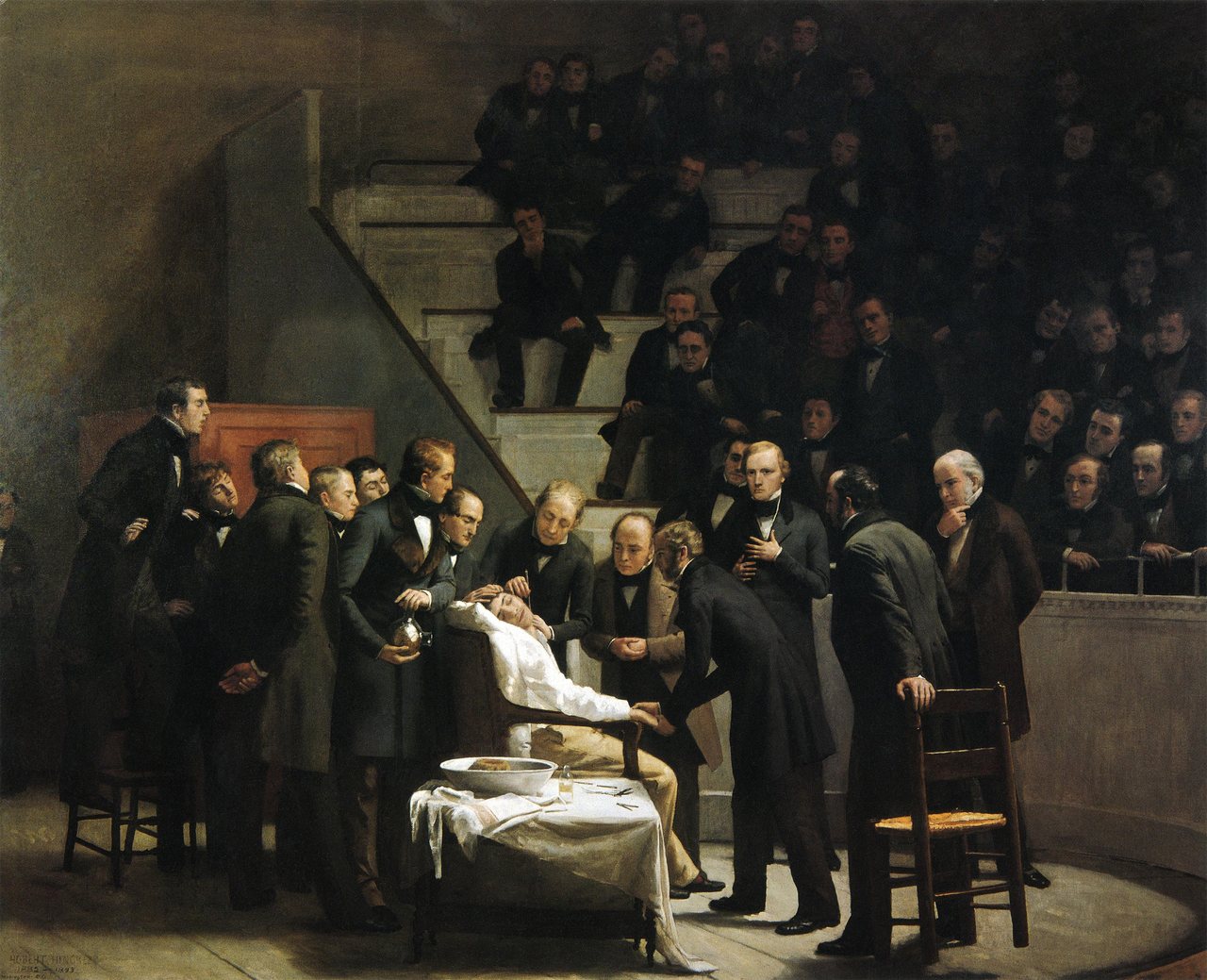
Roughly 350 million times a year, somewhere in the world, a doctor pushes a drug and a conscious person simply stops being there, then comes back hours later with no memory of the gap. We have done this for more than 175 years. It is one of the safest, most routine things medicine does. And we still cannot fully say how it works, or exactly what it switches off. That makes anesthesia the closest thing we have to a controlled experiment on consciousness itself. This is the file on going under, opened claim by claim, each one wearing its evidence.
There is a moment, familiar to anyone who has had surgery, that is genuinely strange to think about afterward. The anesthetist tells you to count backward from ten. You get to about seven. Then, with no sense of any time passing at all, you are somewhere else, being told it is over. Hours of your life happened, and to you they simply did not. That clean, reversible deletion of a person is one of the most remarkable things medicine can do, and one of the least understood. We have performed it for over 175 years, since ether was first demonstrated in 1846, and at the deepest level we still cannot say exactly what we are turning off, or how. Let's open the file.
01What Actually Goes In
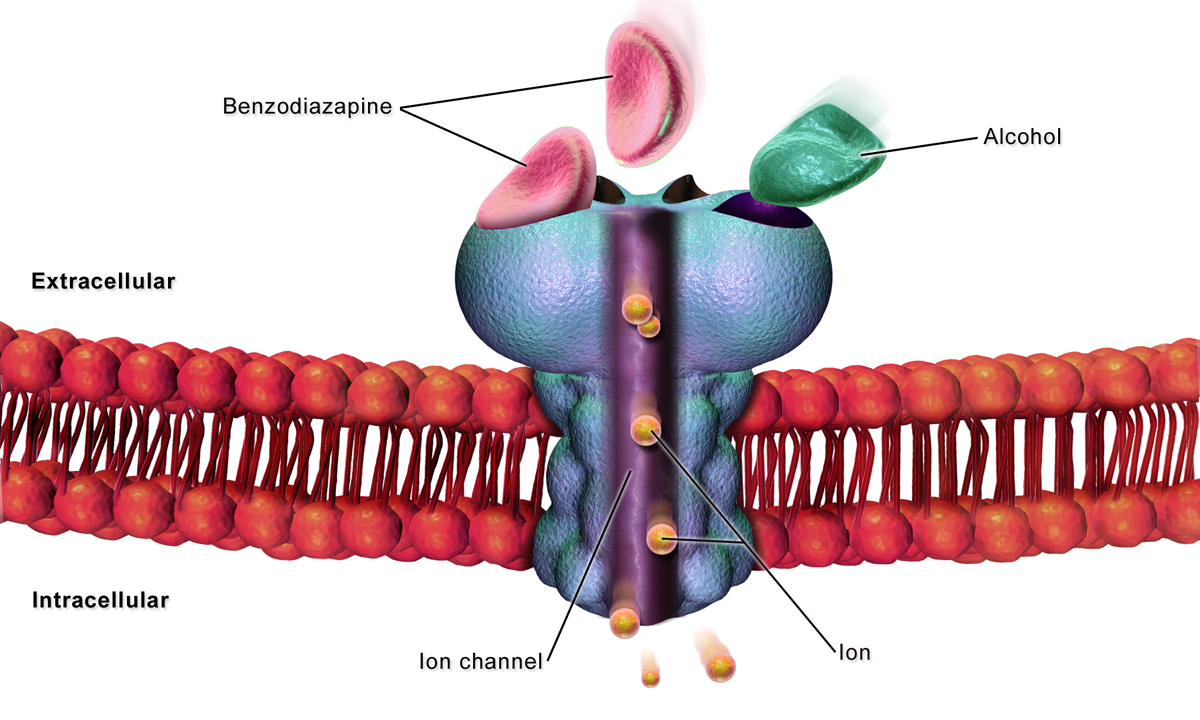
For all their variety, most general anesthetics hit one of two molecular targets. The larger group, including propofol and the volatile gases sevoflurane and isoflurane, enhances the brain's main inhibitory system, the GABA-A receptor, opening chloride channels that quiet neurons down. The other group, including ketamine, nitrous oxide, and the noble gas xenon, blocks the brain's main excitatory receptor, NMDA. A smaller cast of targets, potassium channels, glycine receptors, and others, fills in the rest. The theme is the same: tip the balance of the brain away from excitation and toward inhibition, hard enough, and consciousness goes.
One of the oldest clues is also one of the strangest. Around 1900, Meyer and Overton noticed that a drug's anesthetic potency tracks its solubility in oil across a ten-thousand-fold range of wildly different molecules, a correlation so tight it still holds today. For decades this suggested anesthetics simply dissolved into cell membranes. Modern evidence overturned that: they bind specific protein pockets on receptors, and we now have the crystal structures to prove it. The tightness of the old correlation remains a little bit of a beautiful, unexplained coincidence.
Here is the fact that turns anesthesia into a real experiment on the mind. These drugs have almost nothing in common chemically. Gases, an oily liquid like propofol, a dissociative like ketamine, an alpha-2 agonist like dexmedetomidine, they hit different receptors by different routes. Yet they all arrive at the same destination: the loss of consciousness. That convergence is itself the evidence. It says consciousness does not depend on any one neurotransmitter, but on a particular mode of coordinated activity that all these different drugs manage, by different means, to break.
02What It Does to the Brain
If the receptors are the doorway, the interesting action is what happens to the brain as a whole once the drug is inside. And the headline is a surprise: anesthesia does not mainly turn the brain off. It disconnects it.
Under anesthesia, the brain's local machinery keeps working. Sensory cortex still registers sounds and touches. What breaks is integration, the long-range conversation between regions that knits all that local processing into a single experience. Propofol specifically severs the connectivity between frontal and parietal cortex and fragments the brain's integrative networks, while leaving sensory areas comparatively intact. The thalamus, the brain's central relay, is hit hard: anesthetics flip its neurons from a steady transmitting mode into a bursting, oscillating one that garbles the signal. The lights in each room stay on; it is the hallways between them that go dark.
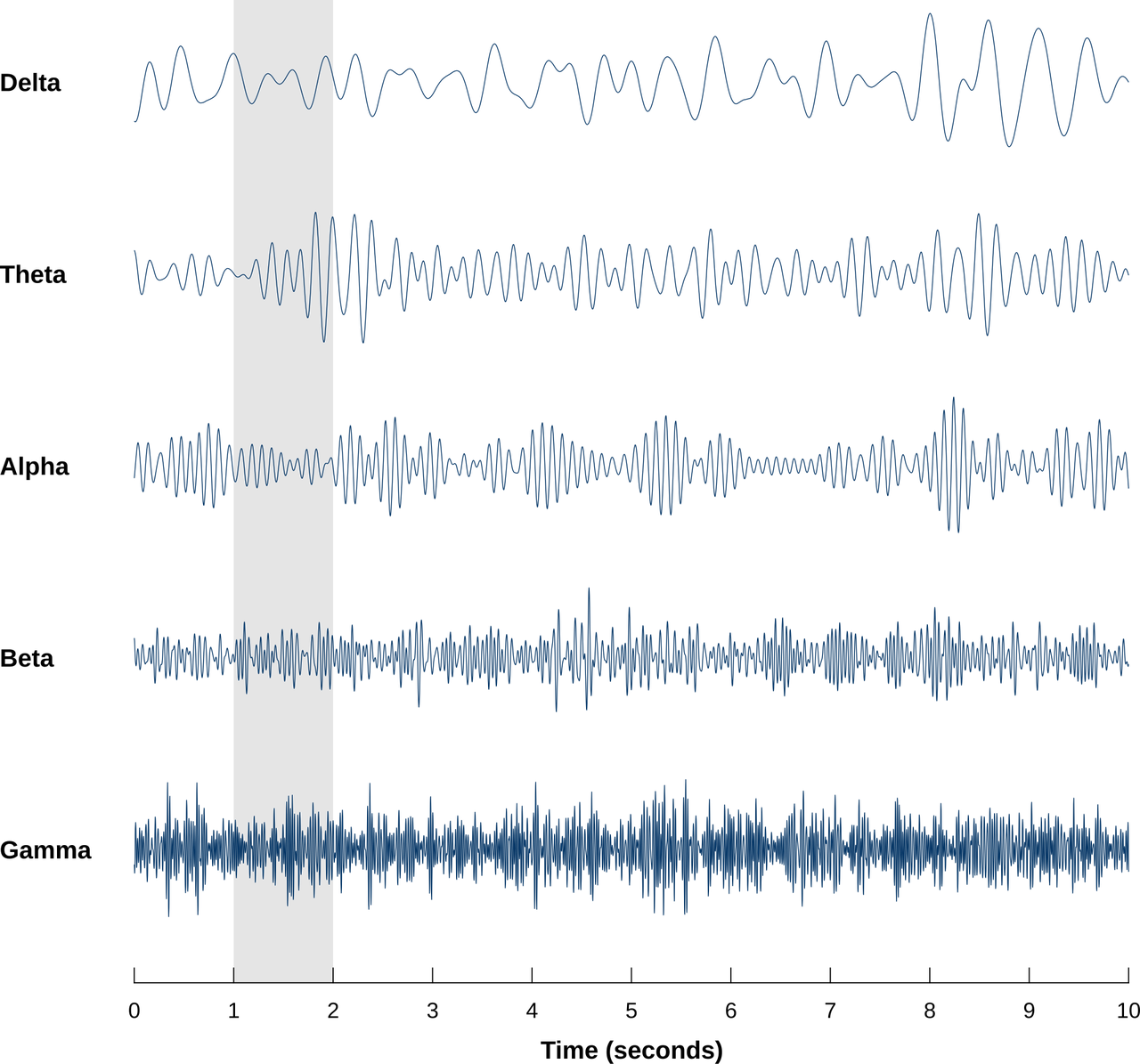
You can read the state off the EEG, and each agent signs its work differently. Propofol drives strong alpha oscillations that migrate from the back of the head to the front, with rising slow waves underneath. At deep levels the trace breaks into burst-suppression, seconds of activity alternating with seconds of near-silence. Ketamine does the opposite of what you would expect from an off-switch: it ramps fast gamma activity higher than in waking, while scrambling the long-range coordination between regions, which is exactly why it produces a dissociated dream-state rather than a clean blank.
The pattern of what gets disconnected is telling. The networks hit hardest are the brain's executive and default-mode systems, the same integrative hubs that go quiet in the vegetative state, while raw sensory connectivity is partly spared. This is a strong hint about consciousness in general: it seems to live not in sensation itself but in the brain's ability to bind sensations into a whole. Anesthesia, on this reading, does not blind the brain. It stops the brain from putting the picture together.
03The Consciousness Meter
If losing consciousness is really about losing integration, then you ought to be able to measure it directly, by knocking on the brain and listening to how far the echo travels. That is exactly what one of the field's most striking tools does.
The Perturbational Complexity Index, developed in Marcello Massimini's lab, fires a magnetic pulse into the cortex and records the electrical echo with EEG. In a conscious brain the echo is complex, spreading, and differentiated, a rich pattern rippling across regions. Under propofol it collapses into a simple, local, stereotyped response that dies where it started. The measure works across states that behavior alone cannot separate. In a study of 208 people spanning wakefulness, sleep, anesthesia, coma, and the vegetative state, it sorted conscious from unconscious with better than 95 percent accuracy, and it did so more reliably than the monitors used in operating rooms.
Ketamine, as usual, is the revealing exception. Its echo is complex, not simple, yet the person is unresponsive, because the complexity is disorganized rather than integrated. That single fact rescues the whole idea from being circular: the measure is not tracking how much the brain is doing, but how coherently it is doing it. Complexity that does not hang together does not buy you a conscious state.
04What the Theories Make of It
Anesthesia has become a favorite testing ground for the big theories of consciousness, precisely because it lets you watch the light go out under controlled conditions. Each theory reads the same findings its own way.
For Integrated Information Theory, which holds that consciousness is integrated information, anesthesia is a natural fit: the drugs lower the brain's integration, and consciousness fades with it, exactly as the complexity measurements show. For Global Workspace Theory, unconsciousness is the failure of ignition, the moment when a signal stops being broadcast across the brain's long-range network; under propofol a sound still lights up auditory cortex but the activation no longer propagates to the frontal and parietal hubs. Both theories genuinely predict much of what anesthesia does. Neither fully explains every state, and ketamine, which fragments integration while ramping activity, remains a stubborn puzzle for all of them.
One framework, the anesthesiologist George Mashour's cognitive unbinding, adds a sharp detail. He points out that anesthetics disable the brain's feedback connections, the top-down signals looping back from higher regions, more readily than its feedforward, bottom-up ones. In other words, the raw forward flow of sensation survives longer than the recurrent, looping processing that folds it back on itself. If he is right, consciousness is carried specifically by those return loops, not by sensation moving one way through the system. It is the same lesson the machine theorists reach from the other direction: a purely feedforward system may process the world without ever experiencing it.
05Awake on the Table
All of this has an urgent practical edge, because the off-switch is not perfect, and the rare failures are the stuff of nightmares. They also expose how slippery the very idea of being conscious becomes at the edges.
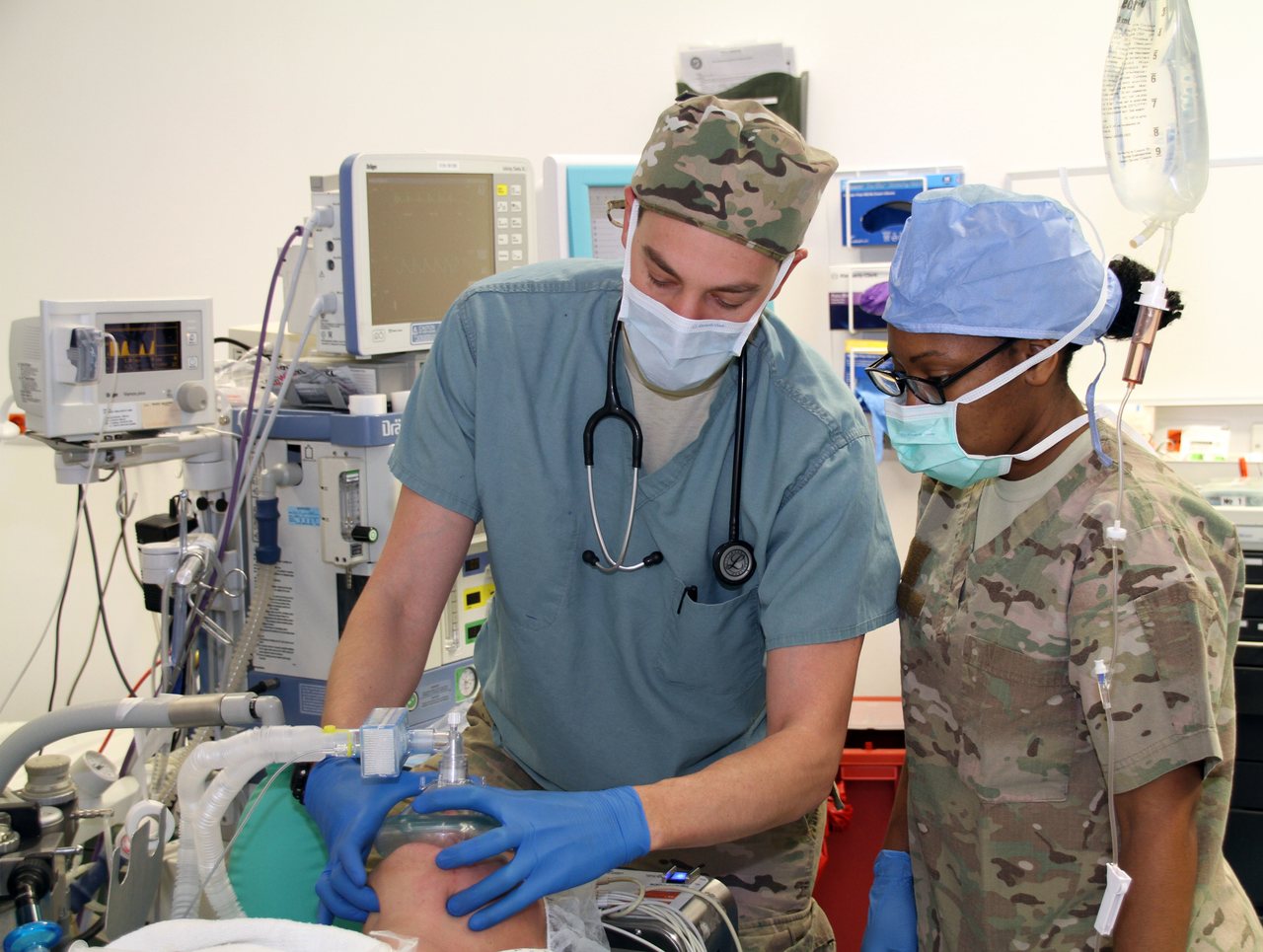
Intraoperative awareness, waking during surgery, happens in roughly one to two cases per thousand with standard monitoring, and a large 26,000-patient study put explicit recall at about 0.13 percent. The most widely used guard against it is the Bispectral Index, a processed-EEG monitor that reduces the risk severalfold when kept in its target range. But it has real blind spots: it is fooled by ketamine and nitrous oxide, unreliable in children, and it does not measure consciousness directly, only a correlate that holds for some drugs. Estimates of lasting psychological harm among the patients who do wake vary widely across sources, from roughly a third to a majority reporting distress or later effects, which is itself a sign of how hard these cases are to study.
The deeper unsettling finding is that unresponsive does not mean unconscious. Using a cuff to shield one arm from the paralyzing drugs, researchers can ask anesthetized patients to squeeze a hand, and a surprising fraction, around one in twenty in one study, do so on command during surgery they later cannot recall at all. They were conscious and connected in the moment, and then the memory of it was simply never written. Others may be conscious but disconnected, dreaming under the drug, cut off from acting or remembering. Telling these states apart, truly absent, present but unresponsive, present but unrecorded, is one of the open frontiers of the whole field.
06Not Quite Sleep, Not Quite Death
It is tempting to call anesthesia a deep sleep. The comparison is comforting and almost entirely wrong, and where it is right turns out to be the most interesting part.
General anesthesia is not chemical sleep. The EEG patterns, the pharmacology, and above all the arousability are different: a sleeping person wakes to a shake or a loud voice, and a properly anesthetized one does not, no matter what you do. Natural sleep is something the brain does to itself and can undo at any moment; anesthesia is a state imposed from outside that the person cannot exit on their own. Calling them the same thing hides the very feature, the deliberate, external, un-wakeable quality, that makes anesthesia so strange.
With one real exception, and it is a beautiful one. The drug dexmedetomidine does not override consciousness so much as borrow the brain's own sleep switch, activating the same sleep-promoting circuitry the brain uses at night. Patients on it are easily roused and keep organized brain rhythms. It is the one anesthetic that genuinely does resemble natural sleep, precisely because it works with the brain's machinery instead of against it. The exception proves the rule: everything else is doing something sleep does not.
And two questions sit at the edge of what can even be asked. Is the deep blank of anesthesia truly like dreamless sleep, or is it closer to a temporary death, a real absence rather than a quiet presence? By definition no one can report from inside it to say. And when a drug like midazolam blocks memory without necessarily blocking consciousness, a patient may experience part of a procedure and retain nothing of it, which raises a genuinely vertiginous question with real ethical stakes: if an experience leaves no trace at all, in what sense did it happen to anyone?
07Coming Back Up
Waking up ought to be the easy part, just induction run in reverse. It is not, and the ways it differs are quietly revealing.
Emergence follows its own path back. Consciousness returns in a rough sequence, brainstem arousal first, then subcortical systems, then the cortex reconnecting, then the front of the brain re-engaging, with specific hubs coming back online in order rather than all at once. There is evidence of hysteresis: the brain may need to climb to a higher threshold to switch consciousness back on than the one at which it switched off, as if the conscious and unconscious states are two valleys with a hill between them, and the hill is taller on the way back.
The word reversible also deserves an honest asterisk. In some patients, especially the elderly, a lasting fog called postoperative cognitive dysfunction can follow anesthesia, with memory and thinking measurably impaired for weeks or longer. Whether the drugs themselves are the culprit, or the stress of surgery, or a vulnerability the patient already carried, is still debated. It is a real complication of the clean on-off story, and worth naming rather than smoothing away.
08The Honest State of the Mystery
So where does that leave us, after 175 years and hundreds of millions of cases? In a carefully honest middle, flanked by two tempting overstatements.
It is wrong to say we know exactly how anesthesia works. We know the molecular targets in fine detail, but the chain from a drug binding a receptor to the actual disappearance of a self, while breathing, reflexes, and much of the body carry calmly on, is not fully mapped. It is equally wrong, in the other direction, to say we have no idea. At the systems level the picture is clear and replicated: disrupted long-range connectivity, impaired thalamocortical communication, collapsed cortical complexity. The truth is neither slogan. We understand a great deal about what happens and still cannot close the loop on why it adds up to unconsciousness.
Honest caution runs deeper still. The near-perfect link between low cortical complexity and unconsciousness does not, by itself, prove that complexity is consciousness; it might be a necessary condition, or merely a faithful marker riding alongside the real cause. And the heavy focus on the cortex may undersell the brainstem, where direct stimulation can restore arousal even in badly damaged brains, a reminder that consciousness may lean on subcortical machinery a purely cortical story leaves out.
Fast Facts
- The Scale
- General anesthesia is used roughly 350 million times a year worldwide
- The History
- First public ether demonstration, Massachusetts General Hospital, October 16, 1846
- Main Targets
- GABA-A receptors (propofol, the gases) and NMDA receptors (ketamine, nitrous oxide)
- The Real Effect
- Disrupted integration between brain regions, not a simple shutdown of activity
- The Meter
- The Perturbational Complexity Index sorts conscious from unconscious at over 95 percent
- The Monitor
- The Bispectral Index reduces awareness risk but has real blind spots (ketamine, children)
- Awareness Risk
- Roughly 1 to 2 cases per 1,000 with standard monitoring; about 0.13% explicit recall
- The Exception
- Dexmedetomidine alone resembles natural sleep, by using the brain's own sleep circuits
- The Honest Verdict
- Not fully understood, not a total mystery either; the middle is the truth
What We Can Actually Stand Behind
The core science is solid. The molecular targets are known in crystal-structure detail. Anesthesia works mainly by disrupting the brain's long-range integration while sparing local processing, a finding confirmed across imaging, EEG, and direct stimulation. The Perturbational Complexity Index really does separate conscious from unconscious brains at better than 95 percent accuracy. And intraoperative awareness is real, rare, and reduced by monitoring. On the what-happens level, this is genuine, replicated knowledge.
The step that matters most is the one still missing: the causal chain from receptor binding to the actual loss of the self is not fully understood. IIT and Global Workspace theory each capture part of the picture and neither captures all of it, with ketamine defying every neat account. Complexity tracks consciousness beautifully without our being sure it constitutes it, the brainstem's role may be underweighted, and unresponsive is provably not the same as unconscious. This is live, unfinished science, honestly labeled.
Several real questions sit past the evidence. Whether emergence involves true hysteresis, whether the anesthetic blank is more like dreamless sleep or like death, and whether quantum effects in microtubules play any genuine role, are all open. Each is a serious question rather than an established answer, and none should be treated as settled.
No, we do not know exactly how anesthesia works, and no, it is not a total mystery either; both slogans are wrong, and the honest position is the middle. And no, general anesthesia is not simply chemical sleep. The EEG, the pharmacology, and the fact that an anesthetized person cannot be roused all say otherwise, with dexmedetomidine the one genuine, illuminating exception.
So the file closes where the honest ones always do, on a working mystery. Every day, in thousands of rooms, we reach into a person with a chemical and switch off the light of their experience, cleanly enough to cut them open, precisely enough to bring the light back on schedule. We can measure the switch flipping. We can watch the brain come apart into islands and knit itself back together. What we cannot yet say is why that particular coming-apart is felt, from the inside, as the end of the world and then, hours later, its quiet return. Anesthesia hands us the closest thing there may ever be to a dial on consciousness, and we still do not fully understand the thing the dial controls. When you next count backward from ten and lose the thread at seven, consider that no one on Earth can yet tell you, in full, where you went.
Sources & further reading
Everything above is drawn from our research library on Theories of Anything. Open the full file to check the sourcing and go deeper.
Image credits
- Robert Hinckley's painting The First Operation Under Ether, depicting the October 16, 1846 demonstration of ether anesthesia at Massachusetts General Hospital Robert C. Hinckley (painted 1882-1893), via Wikimedia Commons. Public Domain Source.
- Cellular diagram of the GABA-A receptor and its chloride channel, showing positive allosteric modulation of inhibitory transmission BruceBlaus, Blausen Medical, via Wikimedia Commons. CC BY-SA 4.0 Source.
- Diagram of the five standard EEG frequency bands: delta, theta, alpha, beta, and gamma Laurens R. Krol, 2020, via Wikimedia Commons. CC0 1.0 Public Domain Dedication Source.
- A physician anesthesiologist administering general anesthesia to a patient in an operating room (NATO Role 3 hospital, Kandahar) Lt. Cdr. Jesse Ehrenfeld, US Navy, 2014, a US Government work, via Wikimedia Commons. Public Domain Source.
- Card crop of Robert Hinckley's painting of the first public ether operation, 1846 Robert C. Hinckley (painted 1882-1893), via Wikimedia Commons. Public Domain Source.


